When to See Bears in Alaska: Season & Viewing Guide
There’s a moment on every Alaska bear tour when the engine cuts and the only sound left is wind and water. You’re standing on a beach across Cook Inlet from Homer, and somewhere in the sedge grass ahead, a thousand-pound brown bear is digging for clams like it’s the most ordinary thing in the world. It doesn’t know you’re there to be impressed. It’s just hungry. And that’s exactly what makes it unforgettable.
People travel to Alaska for many reasons: glaciers, salmon, and the sheer size and breathtaking landscape found in this part of the world. But bear viewing near Homer, Alaska is the one experience that tends to outlast the rest of the trip in memory. There’s something primal about viewing an apex predator go about its day at a respectful distance, undisturbed and unbothered, in a landscape that hasn’t changed much in ten thousand years. It’s not a zoo, and it’s not staged. It’s wild Alaska, doing what it does whether anyone shows up to watch or not.
If you’re weighing options for an upcoming trip, here’s what the experience actually involves, and why timing and location matter as much as who you go with. For details on the guided Alaska bear viewing tours that operate out of Homer, see the full trip breakdown.
What Makes Alaska Bear Viewing Tours Worth the Trip
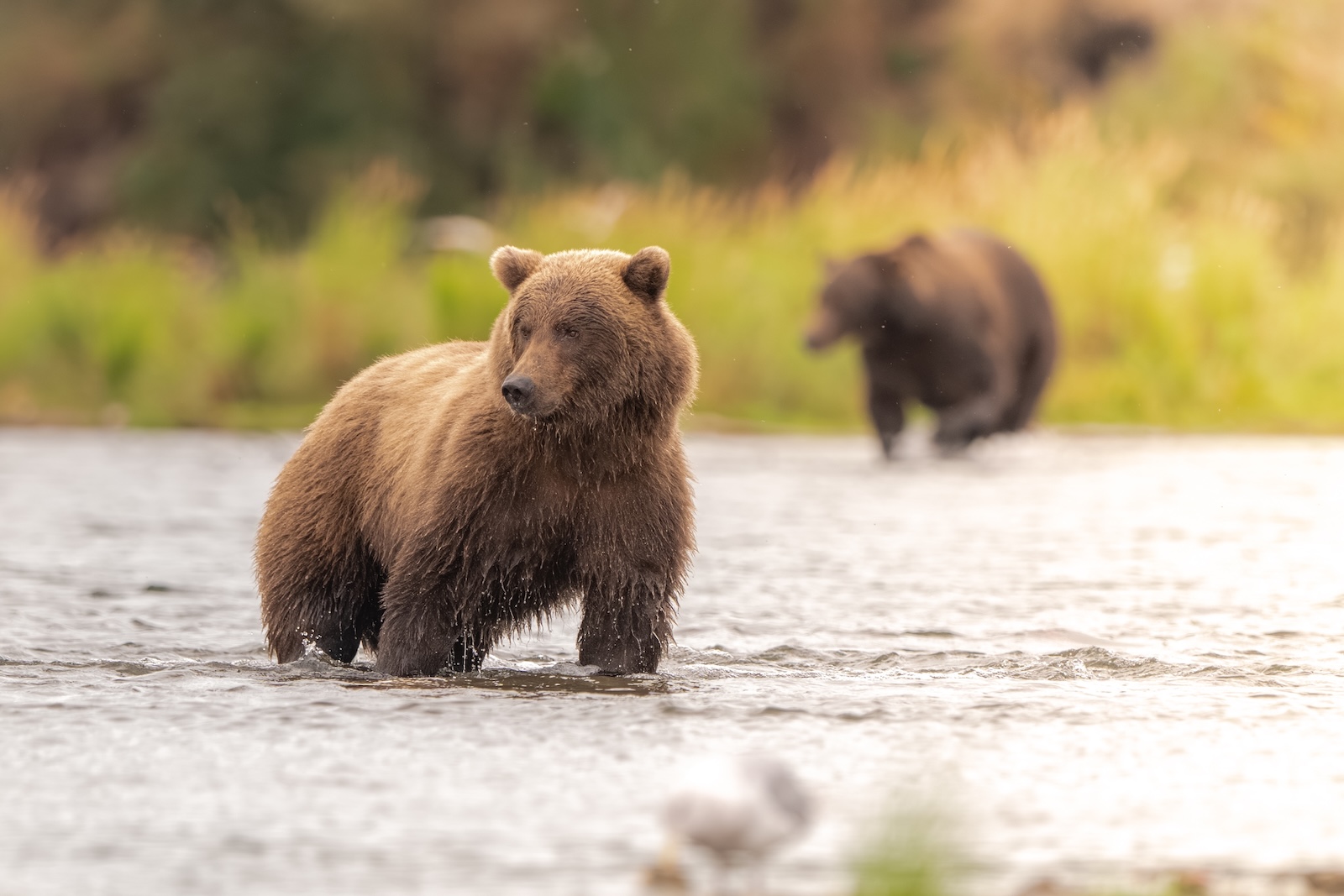
Across the inlet from Homer sits Lake Clark National Park, a stretch of roadless coastal wilderness that is one of the most reliable places in the world to see brown bears up close. The bears gather here because the beaches and tidal flats are loaded with food: razor clams at low tide, rich sedge grass, and salmon as the runs progress through summer.
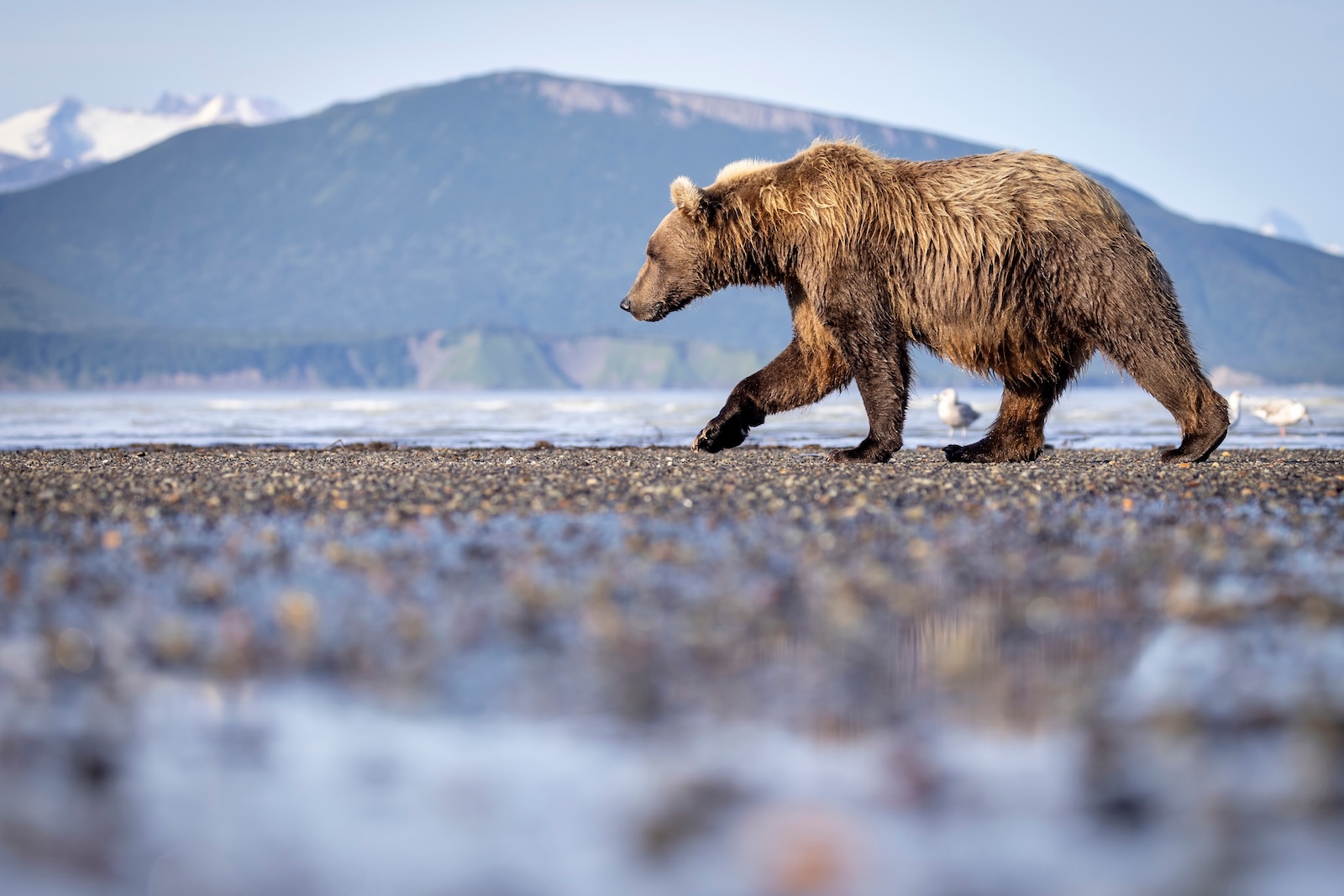
On a typical half-day trip, our guests see between 10 and 20 Alaskan brown bears. Big boars (adult male bears) work the clam beds alone, methodically, pausing every so often to lift their heads and scent the air. Sows (adult female bears) move with cubs trailing close behind, the cubs mimicking every dig and every pause, learning the routine they’ll need for the rest of their lives. Every so often, two bears will cross paths near the same patch of beach, and you’ll watch the whole negotiation play out in body language alone: a stiff-legged walk, a head turn, one bear giving ground before it ever comes to anything more.
On a guided bear viewing trip, visitors typically go ashore in hip boots and walk across the tidal flats to where the bears are feeding, maintaining a respectful distance the entire time. Unlike the more sterile experience you’ll have at places like Katmai National Park or wildlife zoos, there’s no blind, no platform, and no glass between you and them; just open beach and a guide who knows how to read what a bear is telling you with its posture before it tells you with anything else.
You’ll hear the suction-pop sound of a bear pulling a clam from the mud from fifty yards away. You’ll watch the tide line creep back in over the course of the morning and the bears shift their feeding ground with it. Nothing here is choreographed. The bears were doing this before you arrived and they’ll keep doing it after you leave, which is precisely the point. It’s one of the wildest, most authentic Alaska bear viewing experiences you will find.
Boat vs. Plane: Choose Your Bear Viewing Experience
There are a number of Alaska bear tours out there, but ours runs by boat, not by plane — and there’s a real cost and reliability difference between the two. For the full breakdown, including current pricing across local operators and what each trip looks like hour-by-hour, see our guide: Bear Viewing by Boat vs. Plane: Pros, Cons & Costs.
Best Time for Alaska Bear Tours
Brown bears are active and visible in Lake Clark from May through September. Early in the season, they’re working the sedge flats and digging clams at low tide. As summer progresses, salmon arrive in the park’s streams and pull more bears toward the water. Tides drive the daily schedule more than the calendar does, so departure times shift with the water, not the clock.
What to Expect When Viewing Bears in Alaska
Trips run as half-day excursions, typically from 8 am to 1 pm, with hip boots provided so wet feet aren’t a concern. After the boat crossing, you’ll come ashore and walk out onto the flats with your guide, moving slowly and quietly so as not to disturb feeding bears or push them off the beach. Once you’ve reached a good vantage point, most of the morning is spent simply standing and viewing: there’s no rush to move from one spot to the next, since the bears themselves dictate the pace. Your guide will point out behavior worth noticing, a cub testing a new digging spot, a boar marking territory, and will reposition the group if a bear wanders closer than expected, which happens more often than people assume.
Bring layers. Alaska coastal weather can swing from sun to wind to drizzle inside an hour, and you’ll be outdoors and standing on open beach for most of the trip. A telephoto lens or a phone with decent zoom is worth bringing; you’ll want the photos. Binoculars are also worth packing if you have a pair, since some of the best behavior happens far enough out that a phone camera won’t catch the detail.
If watching brown bears feed along an Alaska beach has been on your list, late spring through summer is the season to plan around. Bears remain active in Lake Clark National Park from May through September, with viewing conditions shaped more by the tides than by the calendar.
Frequently Asked Questions About Bears in Alaska
Where can you see bears in Alaska?
You can see brown bears all over Alaska, including popular places like Katmai National Park. However, Lake Clark National Park, directly across Cook Inlet from Homer, is one of the most accessible and reliable places to see brown bears in the wild, and it’s all done without heavy crowds. It’s known for dense concentrations of bears feeding on clams, sedge grass, and salmon throughout the summer.
Where do these Alaska Bear Tours Depart?
Homer is the primary departure point for Lake Clark bear viewing trips. Boats and small planes cross Cook Inlet from Homer to reach the park’s beaches, where brown bears gather in large numbers during the summer months.
When is the best time to see bears in Alaska?
Brown bears are most active and visible in Lake Clark National Park from May through September, with clamming activity early in the season and salmon-driven feeding increasing as summer progresses.
How do you see bears in Alaska?
The most common way to view brown bears is a guided boat or plane trip from Homer into Lake Clark National Park, where guests go ashore on foot with a guide to observe bears from a safe distance.
Is bear viewing in Alaska better by boat or by plane?
It depends on your priorities. See our full comparison of cost, weather reliability, and what to expect from each to decide which fits your trip.