If you’re searching for a Kenai Fjords National Park glacier cruise, you’ve probably already found a dozen tour operators, a stack of conflicting reviews, and no real sense of what actually happens once you’re on the boat. A few hours on the water in Alaska is a real investment of your trip, and you deserve more than “you’ll see glaciers and maybe some whales.”
If you want to know what a Kenai Fjords glacier cruise looks like, roughly hour by hour, based on how these trips actually run out of Seward, Alaska, keep reading!
Where This Trip Starts
Every Kenai Fjords National Park cruise leaves from Seward, a small port town on the east side of the Kenai Peninsula, about two and a half hours south of Anchorage. Seward sits right on Resurrection Bay, which is the water you’ll cross before you reach the national park boundary.
That’s worth understanding up front, because “Kenai Fjords National Park” isn’t a place you walk into. Most of it has no roads at all. A boat is genuinely the only practical way most people ever see it, which is exactly why this has become one of the most popular things to do in Kenai Fjords National Park for visitors staying anywhere on the peninsula, from Seward to Homer to Soldotna.
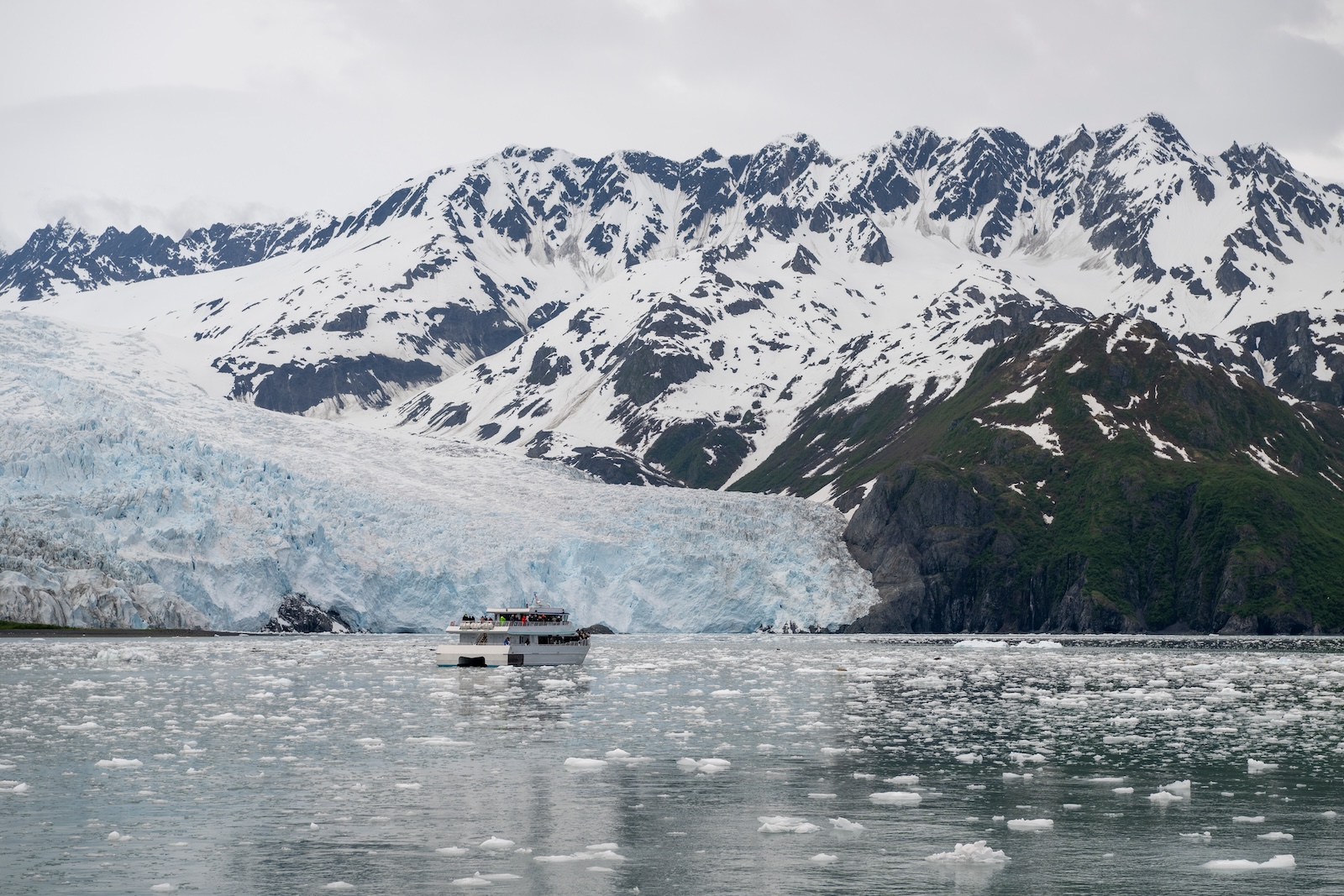
At Alaskan Destinations, our glacier and wildlife tour runs 4 to 6 hours aboard the M/V Arctic Endeavor, a 43-foot Delta boat with a heated indoor cabin, a full restroom, and a spacious outdoor viewing deck. We cap it at 12 passengers, even though the boat is certified for more, because a smaller group means better wildlife viewing and more room to move around when something worth photographing shows up. Lunch, snacks, and beverages are included. All you really need to bring is rain gear and a camera.
Here’s what those hours actually look like.
Hour 1: Departure Through Resurrection Bay
The trip starts at the dock in Seward, where the boat’s Captain and the crew give you the rundown on the boat, the day’s rough itinerary, and what to expect from the water conditions. Then you’re off, heading out through Resurrection Bay itself.
This first stretch is calmer water and closer scenery, mountains dropping straight into the bay, small islands, maybe your first sea otters floating on their backs near the shoreline. It’s a good warm-up for what’s ahead, and a solid stretch for photos.
Hour 2: Wildlife Country
As you move farther from town, this is typically where the wildlife sightings start stacking up. Resurrection Bay and the surrounding waters are home to Steller sea lions hauled out on rocky outcrops, bald eagles perched in the spruce along the shoreline, and, depending on the day, your first glimpse of a humpback whale surfacing in the distance.
Nothing about wildlife viewing is guaranteed, and any honest outfitter will tell you the same. But this stretch of coastline is genuinely productive, and it’s why Kenai Fjords wildlife cruises attract as much interest as the glaciers themselves. Keep a hand free for the camera and don’t put your binoculars away.
Hour 3: Entering Kenai Fjords National Park
Somewhere around the third hour, depending on your route and the day’s conditions, you cross into the park itself. The shift is noticeable. The coastline gets more rugged, the mountains steeper, and the ice starts to show up in the landscape well before you reach a glacier’s face.
This is also where the boat tends to slow down more often. Crews here are watching for wildlife constantly, not just running a set route, so if a pod of orcas shows up or a group of Dall’s porpoises decides to ride the bow wake, you’re stopping for it.
Hour 4: Glacier Viewing
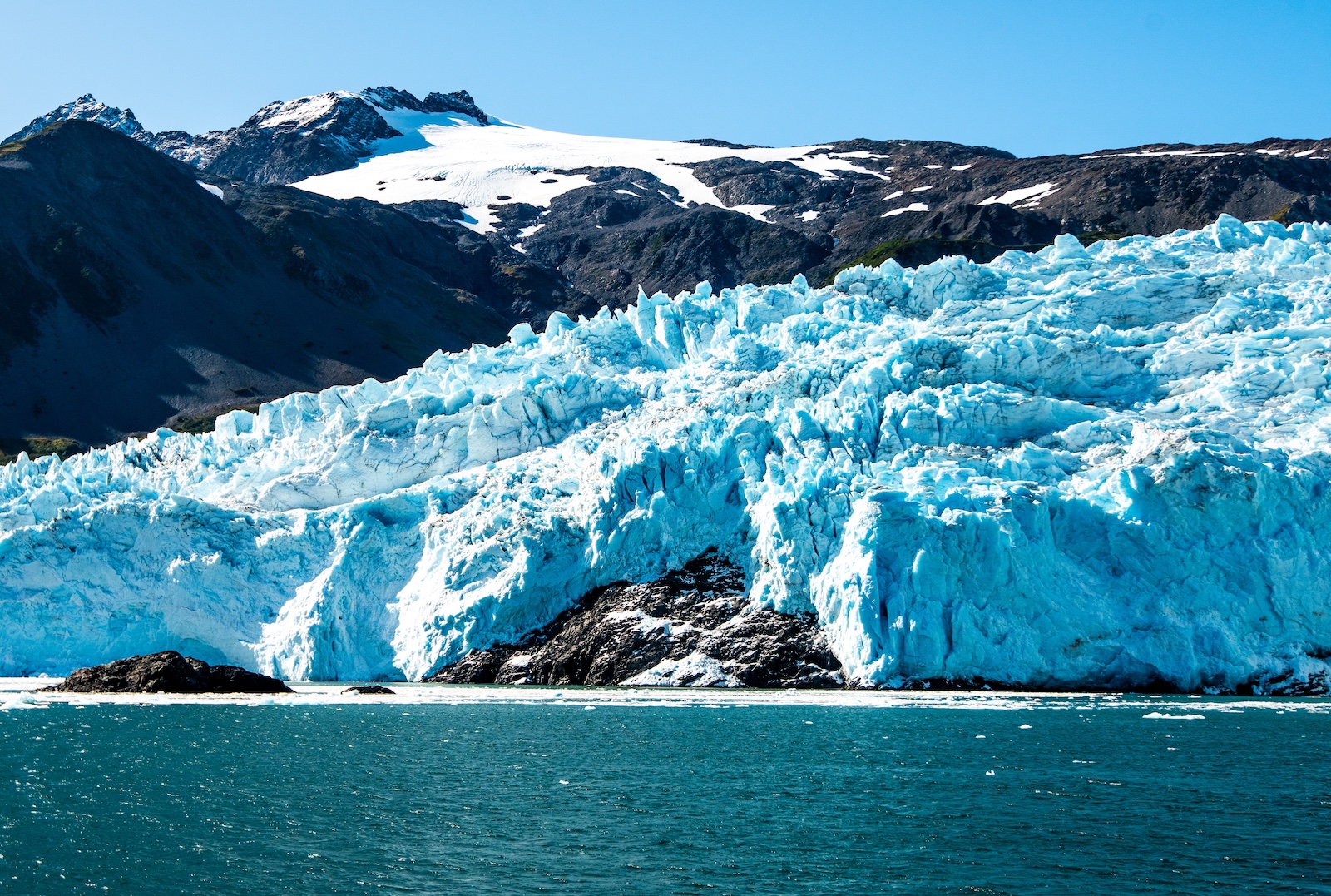
This is what most people came for, and it’s worth taking your time with. Tidewater glaciers in Kenai Fjords National Park calve directly into the ocean, which means you may hear the ice before you see it drop. It’s a low crack or boom, sometimes followed by a wave of blue-white ice hitting the water. Even from a respectful, safe distance, the scale of it is hard to process the first time.
Crews will typically idle here for a while so everyone gets a real look, and a real photo, rather than a quick pass-by. This is also usually where captains talk through how the glacier has changed over recent years, which is genuinely interesting if you’re curious about how fast Alaska’s glaciers are moving and melting.
Hours 5 and 6: The Return Trip
On the longer version of this tour, the return leg isn’t just a straight shot back to the harbor. Boats often take a slightly different path back through Resurrection Bay, which means another round of wildlife-watching opportunities, and sometimes the best sightings of the day happen on the way home, when everyone’s a little more relaxed and watching the water instead of anticipating the glacier.
By the time you’re back at the dock in Seward, you’ve covered a real cross-section of what makes this part of Alaska worth the trip: open ocean, protected bay, marine wildlife, and a tidewater glacier up close. That’s a lot to fit into an afternoon.
Best Time of Year for Glacier Viewing
Kenai Fjords glacier cruises run primarily from May through September, which lines up with when Resurrection Bay is clear enough for regular trips and when wildlife activity in the area peaks. Within that window, June and July tend to bring the most consistent calving activity at the glaciers, since that’s when summer melt is at its strongest. If watching ice actively break off is your main priority, aim for a trip in that stretch rather than the shoulder months of May or September.
That said, shoulder-season trips have their own advantages, including smaller crowds and often calmer water, so there’s no wrong time to go.
What to Pack
Alaska’s coastal weather changes fast, even in summer. A few things worth having with you:
- A waterproof or water-resistant rain jacket, even if the forecast looks clear
- Layers you can add or shed, since it’s noticeably colder on open water than on land
- A hat that won’t blow off
- A camera or phone with a full charge and some storage room, because you will take more photos than you expect
- Motion sickness prevention if you’re prone to it, taken before you board rather than after
Plan Your Trip
A Kenai Fjords National Park glacier cruise pairs naturally with the rest of a Kenai Peninsula trip. If you’re already booking a saltwater fishing charter out of Seward, a glacier tour is an easy add for a second day in town. And if you haven’t settled on lodging or an itinerary yet, our vacation packages can bundle the cruise with fishing, bear viewing, and oceanfront lodging so you’re not piecing the trip together yourself.
Ready to see it in person? Check current pricing, boat specs, and departure times before you plan your Seward stop.
Frequently Asked Questions
Is a Kenai Fjords cruise worth it?
For most visitors, yes. It’s the most direct way to see tidewater glaciers up close and to spot marine wildlife that you simply won’t find on land-based excursions. If glaciers, whales, or Alaska’s coastline are on your list for the trip, a cruise like this is usually the single highest-value few hours you can book.
What is the best cruise to Kenai Fjords?
The right cruise depends on your priorities. Shorter trips (around 4 hours) hit Resurrection Bay and the edge of the park; longer trips push farther into Kenai Fjords National Park for more time at the glaciers themselves. If glacier viewing is your main goal, look for an outfitter running the longer option and ask directly how much time is spent at the ice versus in transit.
Do any cruises go to Kenai Fjords National Park?
Yes. Since most of the park has no road access, boat tours out of Seward are the primary way visitors experience it. Alaskan Destinations runs glacier and wildlife tours departing directly from Seward into Resurrection Bay and the national park.
Is there a wildlife cruise in Kenai Fjords National Park?
Yes, and in practice, most glacier cruises double as wildlife cruises. The route from Seward into the park passes through some of the most productive marine wildlife habitat on the Kenai Peninsula, so sea otters, sea lions, bald eagles, and whales are a regular part of the trip, not a separate add-on.
Is this the same as visiting Exit Glacier?
No, and it’s a common mix-up. Exit Glacier is a land-based glacier near Seward that visitors reach by trail, on foot. The glaciers you’ll see on a Kenai Fjords boat cruise are tidewater glaciers, reachable only by water, deeper inside the national park. Both are worth doing on an Alaska trip; they’re just entirely different experiences.