Salmon fishing on the Kenai River is one of those experiences that gets talked about long before people actually try it, and for good reason. Every summer, millions of salmon return to Cook Inlet and push up the Kenai River toward their spawning grounds. For a few concentrated weeks, the river becomes one of the most productive salmon fisheries anywhere in the world.
Alaska Department of Fish and Game manages the run against a sustainable escapement goal of roughly 750,000 to 1.3 million fish. In a strong year like 2026, the total run has been forecast at over 4 million salmon. For the best chance at an unforgettable fishing trip in Alaska, you’ll want to come armed with all the information you need to know, including the right salmon fishing technique, when to go, where to go, and what regulations you need to know ahead of time.
For the best results, it helps to understand the right technique, timing, and current regulations before you head out.
Why the Kenai River Sets the Bar for Alaska Salmon Fishing
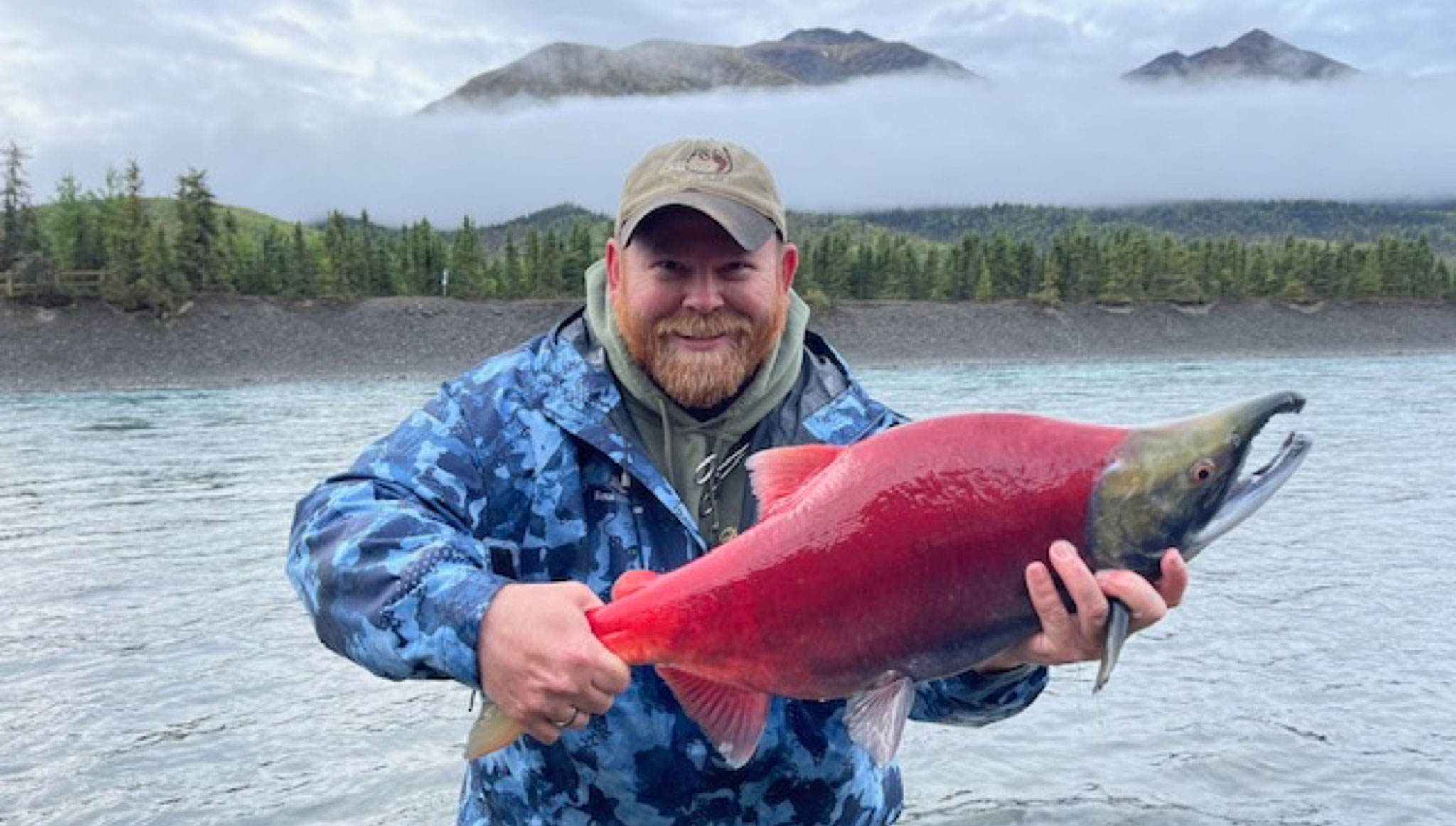
Plenty of rivers across the state can claim strong salmon fishing in Alaska, but the Kenai River earns its reputation through a combination most fisheries can’t match: volume and access, together. The river’s glacial melt gives it that signature turquoise color, and sockeye travel through it in numbers that dwarf most other Alaska salmon fisheries.
What separates the salmon fishing on the Kenai River from a lot of Alaska salmon fishing trips is that you don’t need a floatplane or a week of backcountry travel to fish it. The Kenai runs alongside the Sterling Highway for most of its length, with boat launches and bank access from Cooper Landing down through Soldotna and Kenai. If you’re looking for the best salmon fishing in Alaska that’s still reachable by road, this is a destination that’s truly hard to beat.
One more thing worth knowing before you plan a trip: king salmon fishing on the Kenai River is closed in 2026, including catch and release, by ADF&G emergency order. That closure protects a struggling king run, and it makes sockeye, along with silvers (coho salmon) later in the season, the fish worth building your trip around this year.
The Two Salmon Runs to Know About
Salmon don’t arrive on the Kenai River all at once. There’s an early run and a late run. The early run is smaller and is in late June. This run consists mostly of Sockeye Salmon, which are headed toward the Russian River, a tributary that meets the Kenai near Cooper Landing. The late salmon run, which starts in early August and lasts through September, is when you’ll find silvers (coho salmon) heading to their spawning grounds.
In even-numbered years, you’ll also find fantastic pink salmon fishing on the Kenai River, also during the latter part of the fishing season.
Salmon Fishing Technique: Flossing
River fishing for salmon can be tricky if you don’t know what you’re doing (or if you don’t partner with the right guides). Salmon stop feeding once they enter freshwater, so there’s no lure or fly pattern that’s going to trigger a strike out of hunger.
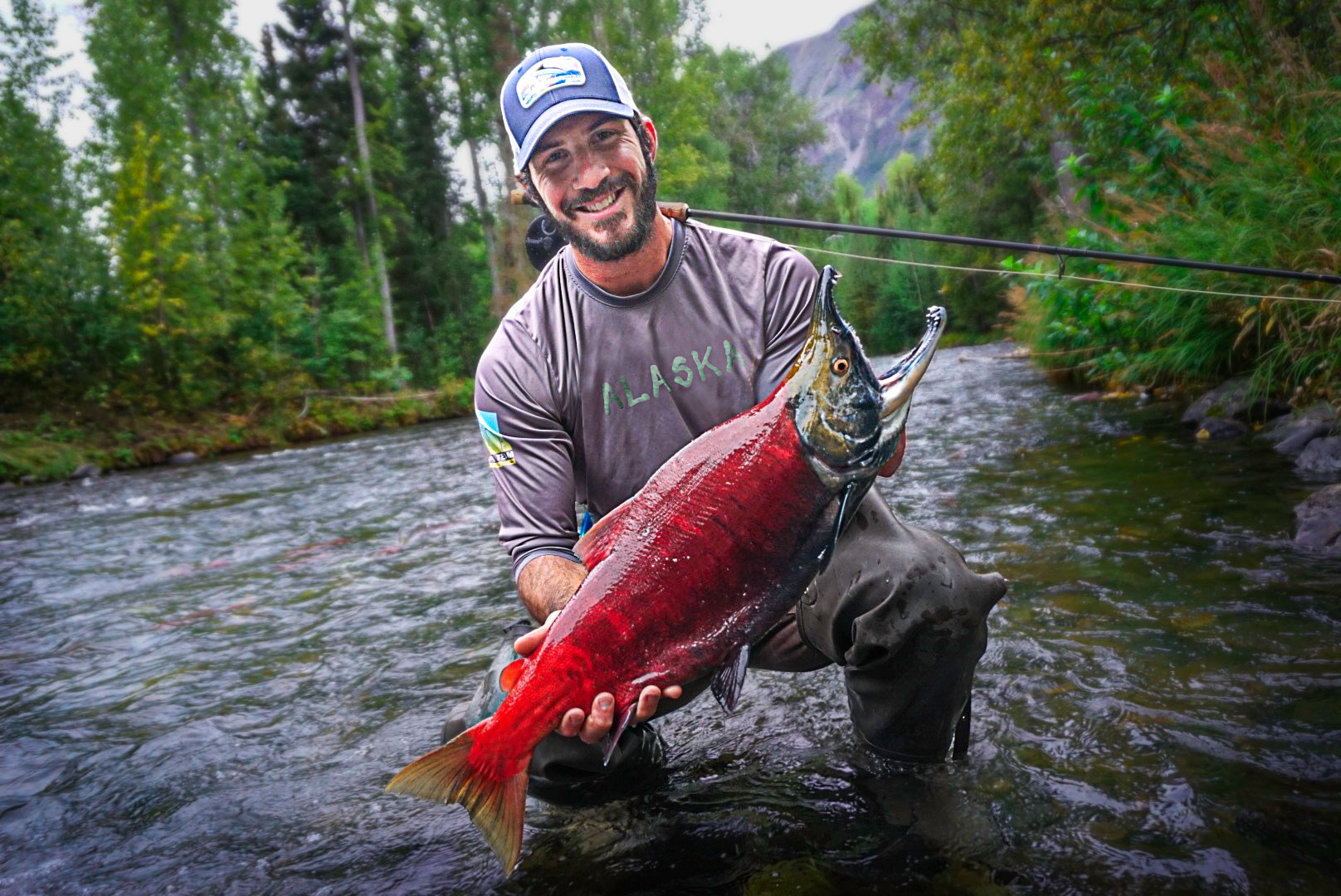
Instead, Kenai anglers use a technique called flossing. The idea is simple: you drift a bare hook or small yarn through a lane of migrating salmon so the line slides into an open mouth as the fish swims forward, and the hook catches the outside of the jaw rather than the fish striking anything. You’re not fishing to entice a bite. You’re presenting a hook in the exact seam of water sockeye are already swimming through.
In practice, you’ll cast slightly upstream and across the current, let the leader sink, and let the rig swing through on a dead drift with no jigging and no retrieve. When you feel resistance, set the hook with a firm upward sweep.
Fishing Gear That Actually Works
A guided trip typically provides more than just knowledge of the water; it also includes the gear needed for a successful day on the water. Included with a typical guided Kenai River fishing trip:
- USCG Licensed Captain + Kenai River Guide Licensed
- A Trip on a powerboat
- All Tournament Grade Rods and Reels
- All Bait + Tackle
- Fish Filleting + Cleaning
Where to Fish for Salmon on the Kenai River
Location matters as much as technique for Kenai River fishing, and the river breaks into a few distinct stretches worth knowing.
- The Russian River confluence is the classic early run spot, with clear enough water that you can often see fish holding before you cast. It’s also one of the most fished stretches on the peninsula and runs under its own fly-fishing-only rules during the sockeye run.
- The middle river, roughly between Soldotna and Skilak Lake, is where the late run spreads out and where most guided fishing trips operate. The water carries more color here, which gives you a bit more room for leader visibility.
- The lower river, near the city of Kenai, sees heavy bank pressure once the personal use dipnet fishery opens for Alaska residents in July. Non-residents can still fish this stretch with rod and reel, just expect more company on the bank during that overlap.
Early mornings and late evenings thin the crowds noticeably, even during the peak of the run, since Alaska’s long summer daylight means there’s no real rush to be on the water at sunrise.

Regulations You Need to Know Before You Cast
Alaska manages this fishery in season, which means limits move based on how the run performs against escapement projections. As of the 2026 season:
- King salmon retention and catch-and-release are prohibited on the Kenai River by emergency order.
- On the lower Kenai River mainstem, the sockeye limit is 6 fish per day and 12 in possession from June 20 through August 15, dropping to 3 per day and 6 in possession outside that window.
- On the middle and upper river, the standard limit is 3 per day and 6 in possession, with section-specific gear rules.
- The Russian River and its sanctuary zone carry their own limits and fly-fishing-only requirements during the run.
Emergency orders override the printed regulation booklet and can change on short notice. Checking ADF&G’s current Sport Fishing page before you fish, or having your guide confirm it, is essential.
Guided Trips vs. Fishing on Your Own
Booking our Kenai River fishing guides gets you a boat, a spot on the water that isn’t already claimed by six other people, and someone reading the sonar counts and water clarity for a living. That knowledge translates directly into more fish, especially if you’re new to flossing or unfamiliar with the river’s layout.
Most operators, including Alaskan Destinations, offer Kenai River fishing packages that bundle a trip with all the gear, so you’re not showing up with your own rods and leaders. Our Peak Season Salmon trips run the Kenai out of Centennial Boat Launch from June 21 through Labor Day, right through the heart of the salmon push, with licensed local guides and fish filleting included.
Fishing on your own from public access points costs nothing beyond a license and basic gear, and the Kenai’s boardwalks and bank access make that a genuinely viable option, particularly at the Russian River confluence where a ferry exists specifically to get walk-in anglers to good water.
A Few Practical Notes Before You Go
The Kenai Peninsula is bear country, and salmon runs are exactly what draws both black and brown bears to the riverbank. Keep harvested fish close to your body or in a bear-resistant container rather than leaving them on the gravel.
Summer weather runs cool, with highs typically in the 60s and rain possible on any given day, so bring real layers and a rain shell rather than a light jacket.
Frequently Asked Questions
What is the best technique for salmon fishing on the Kenai River?
Flossing. Since salmon stop feeding in freshwater, anglers drift a bare hook or small yarn through the fish’s travel lane so the line catches the outside of the jaw as the fish swims past, rather than trying to trigger a strike.
When is the best time for salmon fishing on the Kenai River?
The Kenai sees an early run in June and a larger late run through September. Exact peak weeks shift with water conditions and in-season counts, so check ADF&G’s current sport fish report before locking in dates.
What’s the current bag limit for sockeye on the Kenai River?
It depends on the section and the date. As of 2026, the lower river mainstem allows 6 fish per day and 12 in possession from June 20 through August 15, dropping to 3 and 6 outside that window, with different rules on the middle, upper, and Russian River sections. Always verify the current emergency order before fishing.
Is king salmon fishing open on the Kenai River?
No. As of 2026, king salmon fishing, including catch and release, is closed on the Kenai River by ADF&G emergency order to protect the stock. Sockeye and, later in the season, silver salmon are the fisheries to plan a trip around.
Do I need a guide for salmon fishing on the Kenai River?
Not required, but a guide shortens the learning curve significantly if you haven’t fished the flossing technique before, and gets you into boat water you can’t reach from the bank.
Sockeye salmon fishing on the Kenai River rewards a little preparation. Know the current regulations, get comfortable with the flossing drift, and you’ll understand exactly why this river built its reputation one salmon at a time. Ready to fish the Kenai during peak salmon season? See our Kenai River fishing guides page for current trip options, or book your trip directly.